Isotope profile
Zirconium-89
Zr-89 · Zirconium
Zirconium-89 is the immunoPET workhorse: a 3.3-day half-life matched to antibody pharmacokinetics, which means its radiolytic burden is sustained across a long imaging window.
Public data & model inputs
Beta / positron- Half-life
- 78.4 hours
- Decay mode
- β⁺ / EC
- Charged-particle energy per decay
- 0.102 MeV
- G(H₂O₂) yield
- 0.70
- Clinical use
- Antibody PET (immunoPET)
The radiolytic profile
Why Zr-89 is hard
Zr-89's 3.3-day half-life is chosen deliberately: it matches the slow pharmacokinetics of the antibodies it labels, so an immunoPET scan can follow the tracer for days. That same long clock means the radiolytic burden in the vial is sustained across a long window rather than finishing quickly. Most Zr-89 decays proceed by electron capture rather than positron emission, so the charged-particle energy averaged over every decay is low, and the imaging activity is low too; the absolute peroxide stays on the micromolar scale.
The concern is not the height of the burden but its duration against a fragile payload. Radiolabeled antibodies are radiosensitive, and even a low, steady peroxide level maintained over days can degrade the conjugate and erode its radiochemical purity. For Zr-89 the multi-day clock, not the activity, is what puts the product at risk.
The modeled run
One clinical scenario, uncoated vs DuraRad
The run below models a representative Zr-89 immunoPET vial across two half-lives: uncoated, then with a DuraRad coating on the same geometry.
Scenario: 37 MBq Zr-89 · 10R/5 mL vial · 6.5 days window (two half-lives)
Scroll the chart
Modeled reduction in cumulative peroxide exposure
99.8%
Not a measure of drug protected
- Uncoated peak (upper bound)
- 2.67 µM
- DuraRad peak [H₂O₂]
- 5.75 nM
- Cumulative exposure (AUC)
- 255.0 µM·h → 0.491 µM·h −99.8% modeled
- Modeled peak reduction
- −99.8% 465x lower peak peroxide
Modeled from measured peroxide clearance in DuraRad vials and literature radiolysis yields. Radioactive validation designed and scheduled for Q4 2026 at Washington University in St. Louis.
Model & validation detail
Pseudo-first-order H₂O₂ clearance, k = 0.107 min⁻¹ (Batch 2, 6R / 3.0 mL). Generation from literature G-values. Performance under continuous irradiation not yet validated.
The DuraRad answer
How DuraRad protects this product
DuraRad lines the vial wall with a sol-gel coating that holds immobilized manganese SOD and catalase, so the enzymes stay bound to the glass rather than dissolving into the formulation around a sensitive antibody. Radiolysis of water generates superoxide and peroxide throughout the solution, at random positions and in every direction, and the coating acts as a distributed sink at the wall: SOD converts the superoxide that reaches it into hydrogen peroxide, catalase breaks that peroxide down to water and oxygen, and together they lower the steady-state concentration of both species in the vial. Clearing superoxide and peroxide at the wall keeps their concentration low and lowers the oxidative burden on the antibody.
A low, sustained burden is the case where a wall sink has the most time to work. Zr-89 decays mostly by electron capture, with a positron branch of about 23%, on a 3.3-day half-life matched to slow antibody pharmacokinetics, so it releases its low per-decay energy over days rather than in a sharp early spike; the immobilized enzymes turn over on a timescale of minutes, fast enough to keep pace with peroxide generation across the full multi-day imaging window. In the model the coated vial holds peroxide well below the uncoated level throughout, and the modeled suppression is large, but it stays a modeled result until the Q4 2026 radioactive validation at Washington University in St. Louis confirms it.
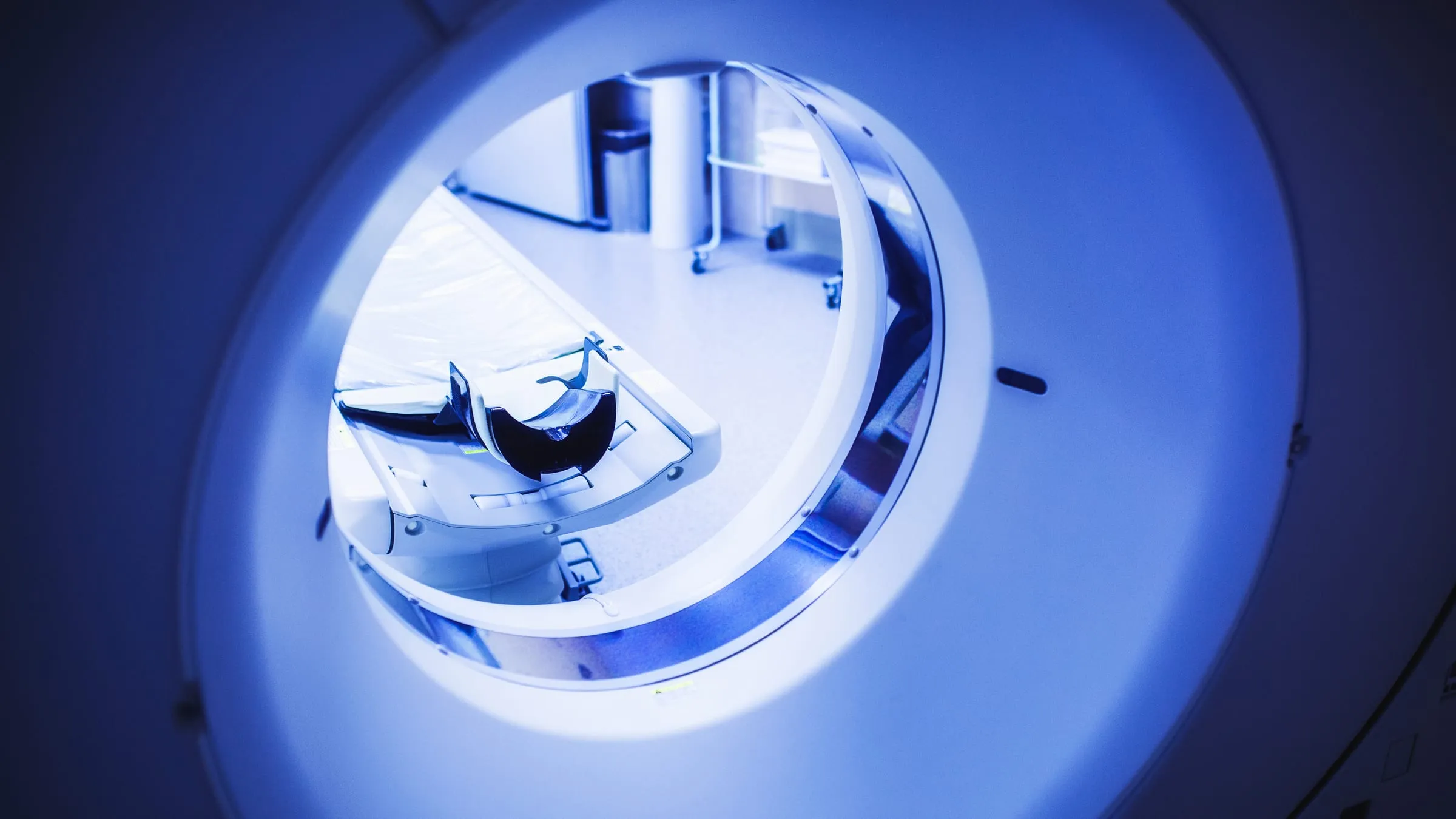
Where it's going
Every Zr-89 dose is headed for a scanner or a treatment room, where arriving intact is the whole point.
Keep exploring
More of the roster
Model Zirconium-89 against your own dose.
Open the simulator pre-loaded with Zr-89 and adjust activity, vial format, and fill volume, reserve coated vials to test on your own bench, or talk to us about your product.